
Organizations run on data. Yet many companies still struggle with disconnected systems, duplicate data entry, inconsistent reporting, and manual processes that slow decision-making. Systems integration blends data across systems to help make informed decisions to improve accuracy and efficiency and shorten process cycle time.
Integration enables automated data sharing, advanced workflow, improved accuracy, better reporting, and more efficient operations across departments such as Finance, HR, Sales, Operations and more. The impact can be significant.
One integration project we completed connects data from Sales, Customer Success, Operations and Finance. This digital transformation provided numerous benefits including:
- Enhance customer Experience
- Accurately capture revenues
- Improve invoicing accuracy
- Accelerate time to collection
- Ensure compliance and audit
- Report on profitability at a granular level
If these are benefits that your organization is trying to achieve, we can provide guidance and expertise.
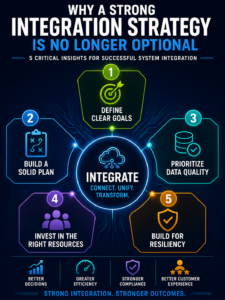
Here are five critical factors that separate successful integration projects from costly disappointments.
- Goals: Clearly define the anticipated impact of the integration. Metrics that define cost and efficiency, data quality and accuracy, speed and cycle time, client experience, risk mitigation and compliance serve to quantify impact. Determine the KPIs to follow and track improvement in these areas.
- Plan Development: Clearly articulate the business purpose of the plan and effectively communicate it to stakeholders. Begin by understanding the current state. Delve into details of the current platforms and the data including definitions, the source system, the owner, the data load and update process, and other system integrations. Ensure that the scope and objectives of the project are clearly communicated across the organization with an ongoing feedback process.
- Data:Test and ensure data validity, quality, and accuracy. Define like fields and ensure common definitions across platforms. Make a roadmap of the data points and identify a common linkage point across the platforms.
- Resources: Beginning with the project sponsor, ensure that both internal and external resources understand the resource commitment from a time and budgetary perspective. Vendors may provide some support to help analyze, program and maintain the integration, but the bulk of the work is usually handled internally or by consulting teams. Clearly define the use of internal vs. external resources and the need to maintain or be able to draw on those skillsets over time.
- Integration Resiliency: Understanding the intended use of the data allows for building validation and audit processes to ensure accuracy. Ensure that the team monitors upgrades or major changes within the multiple systems for impacts on the integrations.
To harness the power of AI and other technology, systems and data integrations are a key step in the process. Sharing verifiable, accurate data across disparate sources to achieve trusted reporting and insights positively impacts decisions and organizational outcomes. Getting it done right requires diligence, communication and the right team.
We enjoy helping organizations solve complex integration challenges and unlock the full value of their data. If you’re planning an integration initiative, we’d love to discuss how we can help your team achieve lasting results.